
An Invitation to Unfold Your Home With More Clarity and Intention
January has a way of bringing our attention back home. Not just to our physical surroundings, but to the parts of our lives asking to be softened, tended to, or reshaped. If you’re exploring organizing support as part of your New Year intentions, you’re not alone—this is when many people feel ready to create a home that truly supports the life they want to step into.
I began organizing professionally in 2018, after apprenticing for a year with another organizer. Nearly eight years later, my work has become less about “fixing” spaces and more about helping people reconnect with themselves through their environment.
At Unfolde, my guiding belief is this:
Your home is an extension of your inner self—and when it’s aligned with who you are, everything becomes more grounded and supportive.
As I’ve evolved in my practice and in my own life, I’ve let go of habits and rules I once thought were universal. What remains is gentler, more human, and far more practical.
What follows isn’t a set of recommendations to adopt or standards to measure yourself against. It’s simply a reflection of how my work—and my understanding of people—has softened over time. These shifts aren’t better ways to organize. They’re reminders that there is no single right way, only what supports your life.
Listening First, Always
When I first started, organizing felt more like a straightforward puzzle: identify the issue, implement the fix. But our homes and our selves are so much more tender and complex than that.
Now, every project begins with conversation.
Where does life feel heavy?
Where do things break down?
What feels impossible, and what feels nourishing?
What wants to change?
Clutter is rarely just about the “stuff.
It’s about systems and ideas present in your home that no longer match the person you’ve become.
My role is to help you create a home that meets you where you are, not where you think you “should” be.
The Habits I’ve Let Go

1. The Pursuit of the Perfect Fold
File folding is space-efficient, aesthetic, and genuinely helpful—but the quest for perfect folds? It simply doesn’t serve most people.
Now I focus on what actually supports daily life:
A slightly slouchy file fold that still shows you what you own? Perfect.
Folding underwear or socks feels pointless? Great—use a bin and toss them in.
You only want to fold what you absolutely must? We’ll work with that.
As for the infamous fitted sheet fold, I will absolutely teach it to clients who love a pristine linen closet. But most people don’t need a magazine-worthy fold—they need a linen closet where they can immediately tell which sheets fit which bed.
We’re not aiming for museum drawers.
We’re aiming for drawers that make your mornings smoother.
Energy saved is just as valuable as space saved.
2. Folding Clothes at All (If It's a Barrier)
Some clients simply will not fold, and for them, folding is not a neutral task—it’s a meaningful obstacle.
When folding becomes the barrier to staying organized, we remove the barrier.
We hang what can be hung, use bins for the rest, and lean into systems that require minimal effort to maintain. There is no moral high ground in folding. There is only what works for your life.
The best organization meets the real version of you—not the aspirational one.
3. Keeping All Cleaning Supplies in One Location
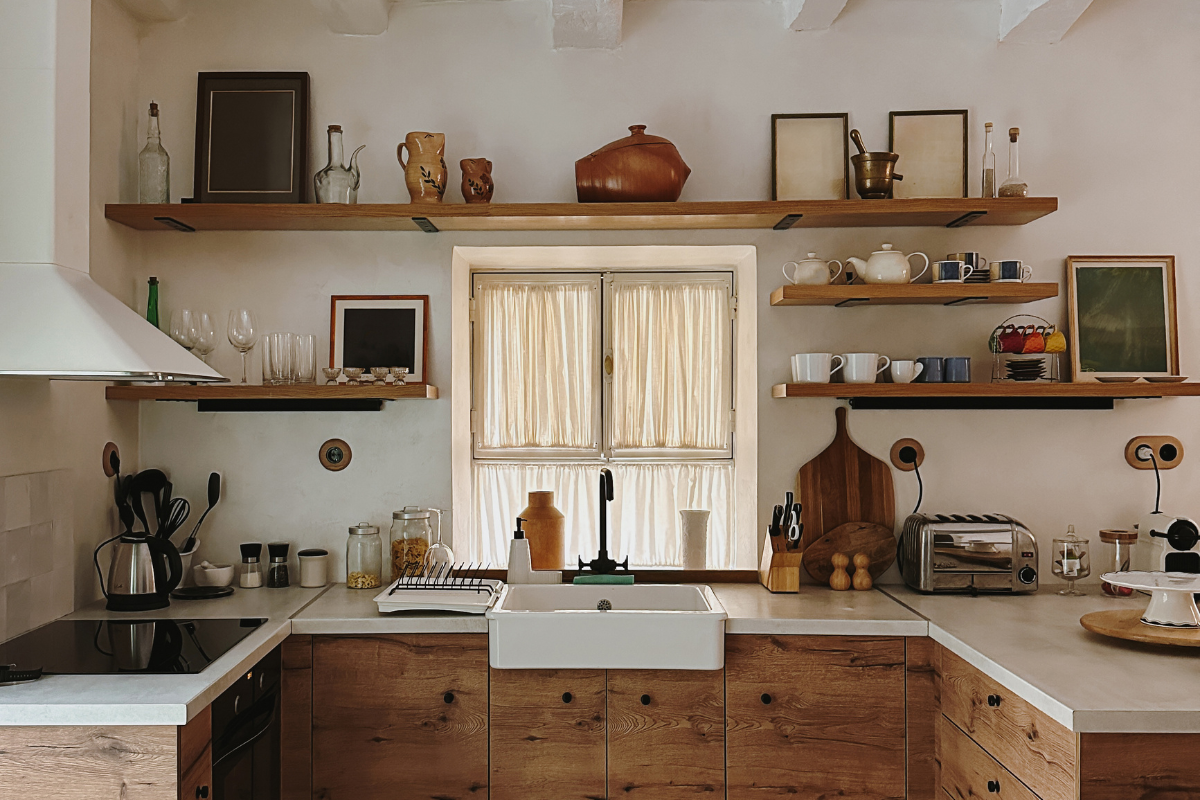
I used to insist on storing all cleaning supplies together for simplicity of inventory.
But different people clean differently.
If you do a quick bathroom wipe-down every day, keeping products under each bathroom sink isn’t clutter—it’s practical, accessible design.
Some people have a regular house cleaning service that handles most cleaning. In these cases, one central location for all cleaning products makes sense so they can easily be found by the cleaners and maintained by the homeowners.
“Purity thinking”, the belief that one method is right for everyone, has no place in a supportive home. Homes are personal ecosystems. What matters is flow.
This adjustment to my approach actually underscores another guiding principle — focus on making items easy to put away, not access. If we want to use an item, we’ll go get it. The drag for most people comes from putting that item back where it belongs once we are done with it.
The person who cleans their bathroom daily is likely to have much more of a struggle getting their cleaning products put away if they all live in a central location downstairs versus if they just had to stow the counter spray back under the sink in the bathroom they just cleaned.
In this and many cases, convenience isn’t clutter, it’s support.
4. Softening the KonMari Category Sequence
Traditional KonMari teaches a strict category order: Clothes → Books → Papers → Komono → Sentimental.
It’s a brilliant structure, but it’s not sacred.
Many Millennials, for example, live mostly digitally and have very little paper. So moving to “Papers” early can feel discouraging or unnecessary when their true stress point is the pantry or the garage.
Meanwhile, other clients feel utterly weighed down by paperwork, and starting there gives them the relief and confidence they need to move forward.
Now, we choose the order based on:
where their biggest emotional or functional pain point is
what will give them a meaningful sense of accomplishment
Motivation matters, and small wins often decide whether someone continues or stalls out.
5. Evolving My Minimalism
I am still a minimalist, but minimalism has shifted for me. When I began this work—living in a small apartment, saving aggressively, craving simplicity—minimalism felt like strict rules that promised an easier life.
Now, with an almost two-year-old and hopes of growing our family, minimalism feels less like restriction and more like discernment.
Minimalism isn’t about owning the least.
It’s about creating space—mentally, emotionally, physically—by having items you have chosen with intention that truly support your life.
A recent example: switching to Nordic sleeping and buying two twin duvets. Earlier in my career, I would have resisted the purchase because the existing king-size duvet was fine and my hardline minimalism said, “Why have two items when you can make do with just one?”
Today, I understand that better sleep is worth more than the ideal of owning fewer things.
Strict rules create suffering.
Self-awareness creates ease.
Why People Begin Organizing
There are countless reasons to begin an organizing journey, but the most common one I see is this:
People reach a moment when they realize they can’t keep living the way they’ve been living.
A life transition often sparks this clarity:
a new job
a big move
a relationship shift
pregnancy
retirement
loss
a diagnosis
Something inside them says, “Enough. I need something different. I am worth investing in.”
That moment is profound. It’s the beginning of tending to your home—and to yourself—with intention
Organizing isn’t about creating perfect spaces. It’s about creating supportive ones—spaces that help you breathe, regulate, rest, and imagine a life that feels more aligned.
It’s about making space, externally and internally, for the life you want to live. And for many people, that process also includes letting go of the rigid expectations January places on our bodies, habits, and homes—something I explore more deeply in my essay January Is Not a Test You’re Failing.
If you’re noticing a desire for things to feel more supportive this season, here’s how we can work together.
You can choose the level of support that fits your life right now: in-home organizing, virtual sessions, or guided DIY downloads—including a free starter checklist. You can also begin with a free 30-minute conversation to explore what kind of support would feel most helpful.
Kelley Jonkoff, founder of Unfolde, is a home organizer and writer exploring how our spaces shape our stress, our relationships, and our daily lives. Through her work, she helps families simplify their homes with intention—and writes about the deeper emotional work behind organizing and letting go.